Melnics, incantations and Craymel artes
Every Melnics glyph maps to one English letter, so signposts and books can be read directly once you know the substitution — and the same syllables are what casters speak.
Melnics is the reason Celestia feels like a different game. It is a fully constructed language, written and spoken, and it is also the language every Craymel arte is cast in.
The written script is a substitution cipher
Every symbol in written Melnics corresponds to one letter of the English alphabet, and the symbols themselves are shaped like English capitals turned sideways to the left. Numerals, punctuation and other marks have their own characters, but they follow the same logic.
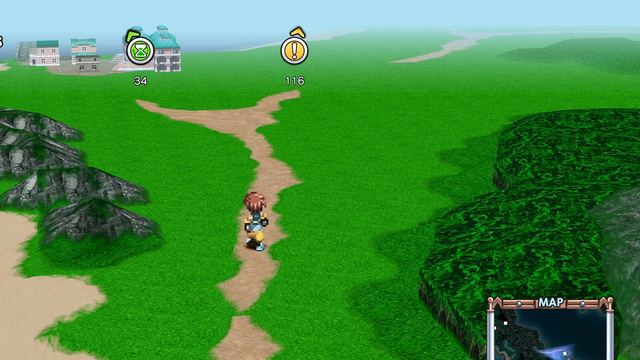
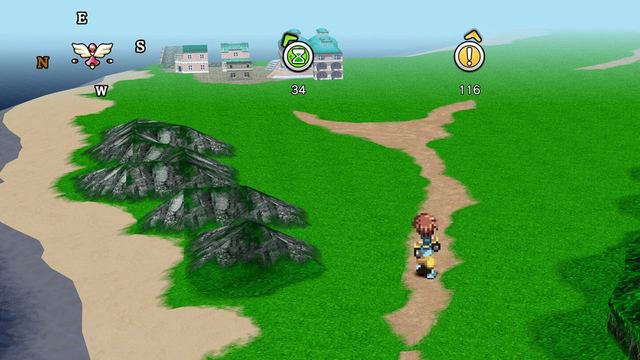
That means every Celestian sign, book and inscription in the game is readable without a translation table in front of you: learn the shapes once and you can read a shop sign the same way you read a page. Contractions do not exist in Melnics, which is occasionally a clue that a piece of text was written by an Inferian.
Spoken Melnics is a different language entirely
Pronunciation follows Japanese phonetics rather than English. Every written character carries a specific syllable, much like a kana script, and words are formed by connecting syllables. Numbers get full word names instead of syllables.
The split is deliberate and it is the language's best joke: Japanese players can hear Melnics and cannot read it, English-speaking players can read it and cannot hear it. The rules do not change between regions, which means the translation puzzle works identically in every release.
Reading the setting
Celestians call their own world "ANDIN", meaning "here", and themselves "ANDINUEMUSU" — "here-people". On Inferia the same language is used only by Greater Craymels and by Craymel mages, which is why the party's encounter with a Celestian girl who speaks nothing else is a plot problem rather than a translation inconvenience.
The Orz Earring
The party cannot understand spoken Melnics until Professor Mazet in Morle gives them Orz Earrings. Inferia's high-ranking Craymel mages are issued the same earrings, and most of them never meet a Greater Craymel despite holding the qualification.
If you are early in the game and characters are talking past each other, this is the missing step. Nothing downstream works without it.
Craymel artes
Craymel artes are spells cast through a Craymel Cage rather than learned by a character. Which artes you have is a direct function of which Greater Craymels you have sealed, not of levels or equipment.
Three rules govern them in battle:
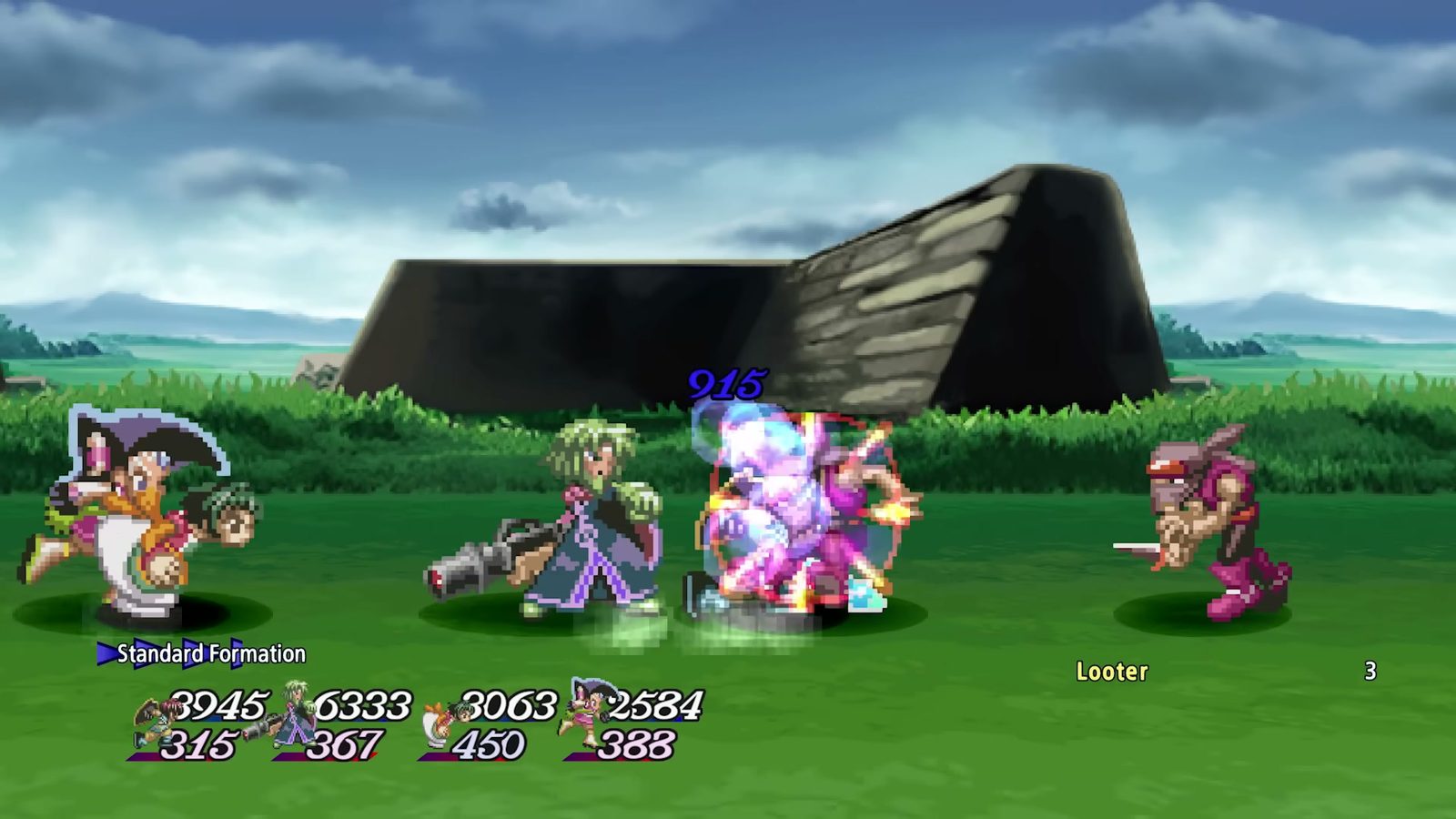
- Only one spell animates at a time, for either side. Queue two casters and the second waits.
- Elemental resistance is heavy. A nullified element does close to nothing, so the caster you bring matters more than the caster being good.
- Long animations are a weapon. A high-level Craymel arte with a long animation locks an enemy out of acting while your melee characters work underneath it.
Melnics in the wider series
The language did not stay inside this game. It was reused as the official language of a religious state in a later Namco strategy title, and it appears in the tie-in fiction as well — which is a fair measure of how much detail went into something most players experience as background texture.